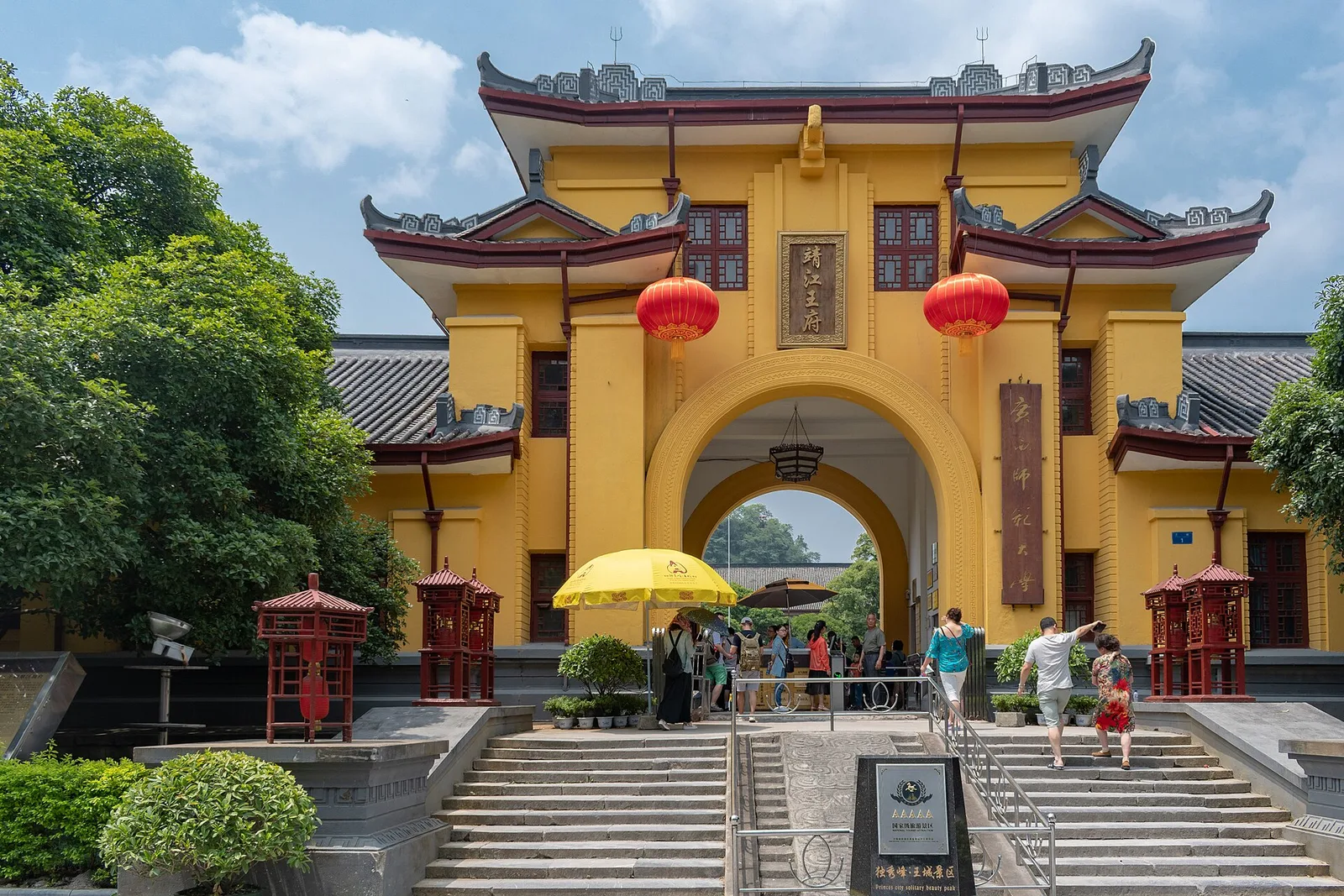
The Jingjiang Prince City is a walled compound in central Guilin, built in the Ming dynasty as the residence of the Jingjiang princes. It contains a restored palace, gardens, carved stone tablets, and Solitary Beauty Peak, a limestone tower that rises inside the walls. The site is both a museum and a park, and it is one of the few places in Guilin where you can engage with the region's long history rather than its scenery.
In short
Allow two hours. See the palace and the stone inscriptions, then climb Solitary Beauty Peak for the best city view. Go in the morning to avoid the heat.
Before you book
Prices and schedules change
Reserve the fixed-time items first, then build the rest around the weather. If you are deciding between two versions of the trip, send both.
What is inside
The compound was the residence of the Jingjiang princes, relatives of the Ming emperors, who ruled the region from the 14th century. The palace buildings are restored rather than original, but the walls, layout, and stone inscriptions are genuine. The site includes gardens, a small museum, and several halls with exhibits on the princes and the region.
The stone tablets are the quiet highlight: carved calligraphy and records from the Ming and Qing periods, set into the walls and gardens. They reward a slow look, especially if you read Chinese. The cliff inscriptions guide explains the wider stone archive. The palace itself is modest compared with imperial sites in Beijing or Nanjing, but the setting beneath the peak is distinctive.
Climbing Solitary Beauty Peak
The peak rises inside the compound and is climbed by a steep stone staircase, about 15 to 20 minutes for most people. The top gives a 360-degree view over the city, including the lakes and the river. It is the best city view in Guilin, and far less crowded than the river viewpoints.
The steps are narrow and uneven, with handrails in places. Avoid it in wet weather or if you have mobility problems. The Two Rivers and Four Lakes are visible from the top, which helps you orient yourself for the evening walk.
History and context
The Jingjiang principality was established in 1370 and lasted until the Ming collapse in the 17th century. The palace complex was later used by the Qing and then by local institutions, which explains the mix of restored and repurposed buildings. The site is a useful counterweight to the landscape-heavy itinerary: it explains who governed this region and how. The Ming princes guide follows the story to the tomb field at Yaoshan.
Exhibits are mostly in Chinese, with limited English signage. A guide or a good translation app helps. The language briefing covers useful tools.
Is it worth it?
If you have any interest in Chinese history or architecture, yes. If you are in Guilin only for the karst, it is skippable. The ticket is not cheap, and the palace alone would not justify it; the climb and the inscriptions make the difference.
Combine it with Reed Flute Cave or a walk through the old city. It is also a good rainy-day option, as the museum and halls are indoors. The rainy day route includes it.
Verdict
The best historical stop in Guilin, and the best city view. Go for the peak and the stone tablets.
Next in the manual
04 linksField desk / direct line
Not sure this fits your trip?
Send the dates, the group, and what you are deciding between. The field desk will tell you what to cut and what to keep.
Independent advice. No bookings, no commissions, no visa service.