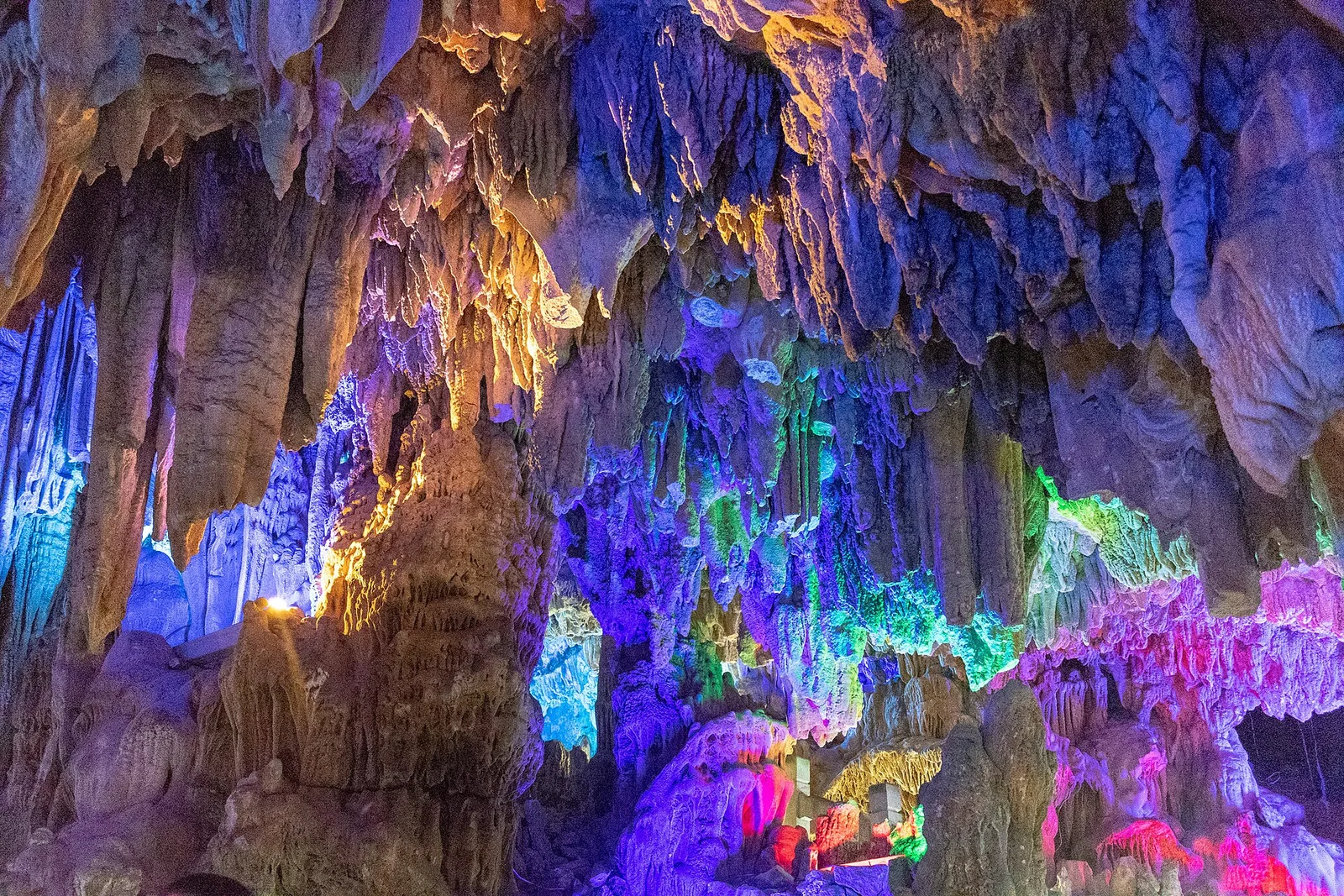
Reed Flute Cave is a 240-metre limestone cavern northwest of central Guilin, named for the reeds that once grew at its mouth. Inside, a boardwalk loops through chambers of stalactites and stalagmites, lit in saturated greens, pinks, and blues. It is unashamedly a show cave, with coloured lights and interpretive signs. The geology is real and the scale is considerable; the atmosphere is closer to a theme park than a wilderness.
In short
Allow 90 minutes including the drive. Go early or late to avoid tour groups, wear shoes with grip, and treat the lighting as part of the spectacle rather than a flaw.
Before you book
Prices and schedules change
Reserve the fixed-time items first, then build the rest around the weather. If you are deciding between two versions of the trip, send both.
What is inside
The route is a one-way loop with a guide, or at least a group herded along by staff. Chambers have names like Crystal Palace and Dragon Palace, and the lighting is designed to make the formations look like animals, waterfalls, and forests. It is not subtle. Children tend to love it; adults who have visited other show caves may find it familiar.
The cave is cool and damp year-round, a relief in summer and a reason to bring a layer in winter. The boardwalk has steps and slippery patches. Allow more time than the sign suggests if you want to take photographs without holding up the group.
Is it worth the ticket?
If you have never been inside a large limestone cave, yes. The scale of the chambers and the density of formations are genuinely impressive. If you have visited caves in Vietnam, China's southwest, or Europe, the lighting and crowd management may wear thin. The ticket is not cheap by Chinese provincial standards.
It pairs well with Elephant Trunk Hill on a city day, and it is a sensible rainy-day option. It is not a substitute for the river. The rainy day route uses it as an indoor anchor.
Crowds and timing
Tour buses arrive in waves from mid-morning to mid-afternoon. The first hour after opening and the last hour before closing are calmer. Weekends and Chinese holidays are busy regardless. The cave is a fixed-loop attraction, so a large group ahead of you can slow the whole visit.
Tickets are sold at the gate and through hotels. There is no strong reason to book far ahead outside holiday periods. Check the current opening hours, which shift by season, and confirm whether the cave is included in any city pass you have bought.
Getting there and nearby
The cave is about 20 minutes by taxi from the city centre, on the northwestern edge of town. Public buses run nearby but are slow and crowded. A taxi or ride-hail is the simplest option, and easy to combine with a stop at the Jingjiang Prince City on the way back.
There is a small lake and garden at the cave entrance, which makes a pleasant 15-minute walk before or after. Food options nearby are limited and touristy; eat in the city instead. The getting around briefing covers taxis and ride-hailing.
Verdict
Worth one visit if caves are new to you. Skip it if you are short on time or have seen better show caves.
Next in the manual
04 linksField desk / direct line
Not sure this fits your trip?
Send the dates, the group, and what you are deciding between. The field desk will tell you what to cut and what to keep.
Independent advice. No bookings, no commissions, no visa service.