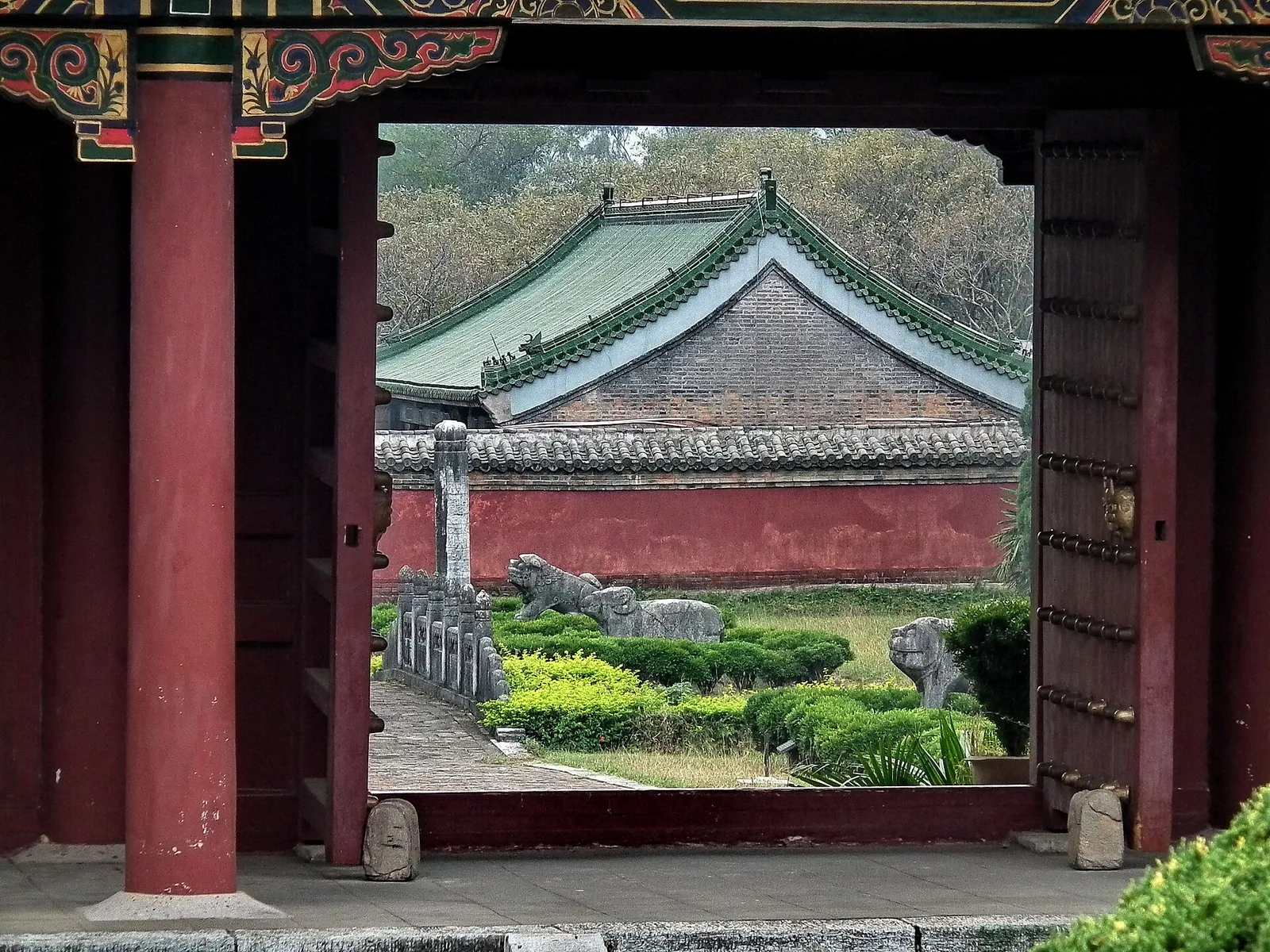
For most of the Ming dynasty, Guilin was the seat of the Jingjiang princes, imperial relatives who ruled the region on behalf of the court in Beijing. They built a walled palace around Duxiu Peak and a tomb complex east of the city at Yaoshan. The palace is now a museum and park; the tombs are quieter, with stone animals and officials still standing in the grass.
In short
See the Jingjiang Prince City in the city centre, then give half a day to the tomb complex at Yaoshan. Go with a driver or a guide; the tombs are spread out and poorly explained in English.
Before you book
Prices and schedules change
Reserve the fixed-time items first, then build the rest around the weather. If you are deciding between two versions of the trip, send both.
A Ming court on the frontier
The Jingjiang princes were part of the Ming imperial family, sent to govern the far south. Their court brought officials, craftsmen, and ritual to Guilin, and their palace became the political centre of the region. The title passed through generations until the dynasty fell in the seventeenth century.
The princes also left a paper trail and a building programme. The palace, the tombs, and the inscriptions at Duxiu Peak all belong to the same story: a frontier city tied to the imperial centre by family, ritual, and ambition.
The palace in the city
The Jingjiang Prince City sits around Duxiu Peak, the isolated limestone hill in the middle of Guilin. The current buildings are partly reconstructed, but the walls, the layout, and the rock inscriptions are original. The site later served as an examination hall, which is why some halls look more scholarly than palatial.
Climb Duxiu Peak for the view over the city if the path is open. The sight guide covers tickets and timing. Allow 90 minutes for the palace and the climb.
The tomb field at Yaoshan
The princely tombs lie east of the city, scattered across the slopes of Yaoshan. The approach avenues are lined with stone officials, horses, and mythical beasts, weathered but still legible. The setting is agricultural and quiet, a sharp contrast with the palace crowds.
The tombs are not a single ticketed site with a clear route. A driver or guide makes the visit practical. Do not climb on the stone figures or move between roped areas. The city centre guide explains the base for a half-day trip.
How to visit
Do the palace on foot from the city centre, then take a taxi or a hired car to Yaoshan. A half day is enough for both if you start early; the tombs are better in the morning light and cooler hours. Combine the tombs with the 4-day route only if you have a driver for the day.
English signage is limited. A guide adds context, and the planning-help page explains how to arrange one. The wartime airbase note covers a much later layer of Guilin's military history.
Verdict
The palace is the headline; the tomb field is the atmosphere. Do both.
Next in the manual
04 linksField desk / direct line
Not sure this fits your trip?
Send the dates, the group, and what you are deciding between. The field desk will tell you what to cut and what to keep.
Independent advice. No bookings, no commissions, no visa service.