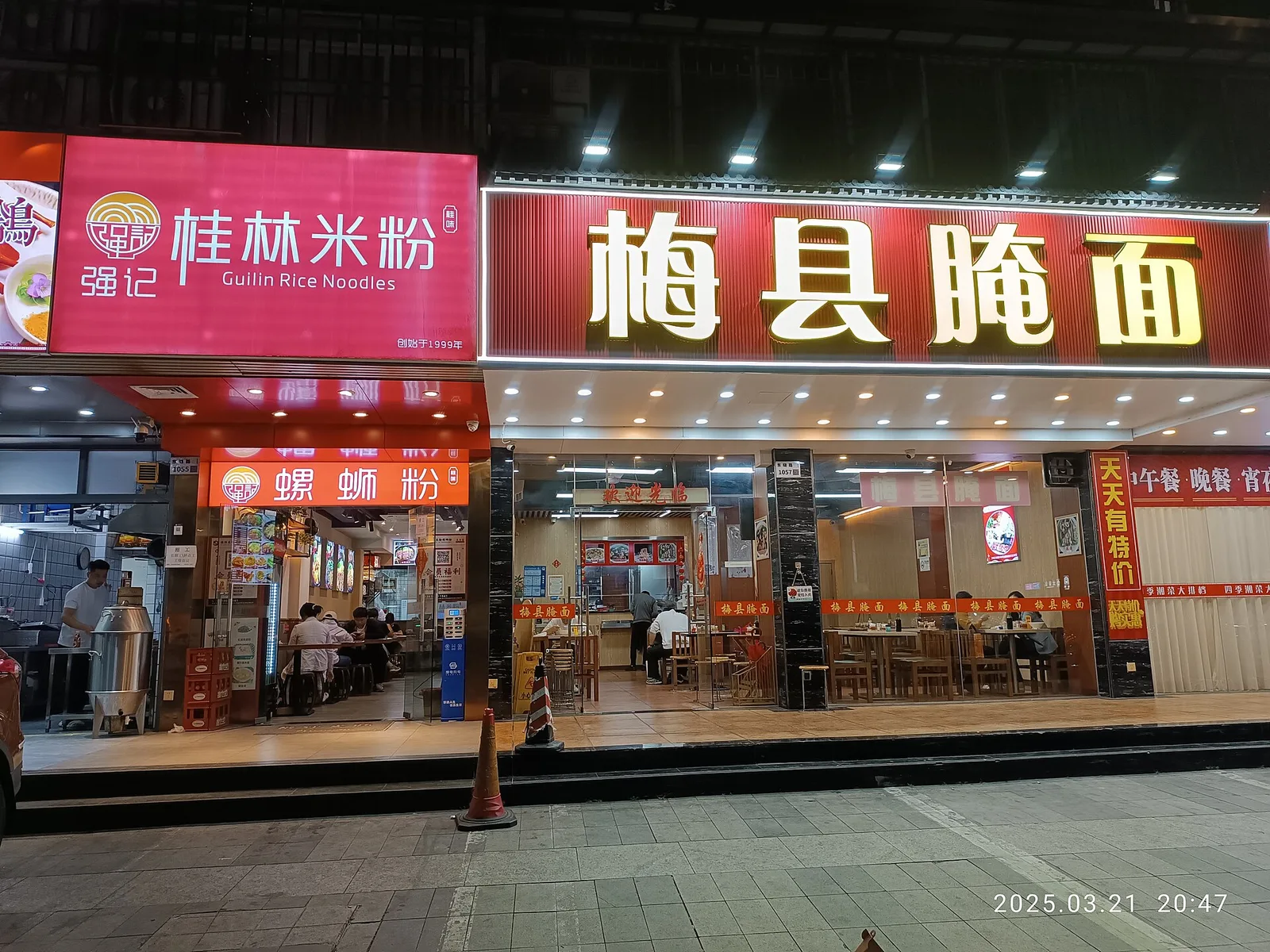
Guilin wakes early and eats standing. By half past six the neighbourhood noodle shops have their lights on, the first pots of broth are steaming, and a queue is forming: office workers, taxi drivers, students, grandmothers with a shopping bag over one arm. The bowl costs less than a coffee, takes ten minutes, and is eaten at a steel table on the pavement or a plastic stool too low for comfort. It is the most reliable window into how the city starts its day.
In short
Go between 7 and 9am, order er liang (二两) dry-style with braised meat, add crispy pork if you eat it, and choose the shop with the local queue. The ritual matters more than the restaurant.
Before you book
Prices and schedules change
Reserve the fixed-time items first, then build the rest around the weather. If you are deciding between two versions of the trip, send both.
Why breakfast is the local meal
Guilin's working day starts early, and the noodle shop is the first stop. Shops open before seven, serve through the morning rush, and often close in the early afternoon or when the noodles run out. The rhythm is fast: order at the counter, pay, hand the ticket to the kitchen, find a seat if there is one, and eat.
Hotel breakfasts buffer you from the city. That is fine if you need it, but the street version is where the day's information is: who is working, what the weather is doing, which queue is worth joining. If you sleep until nine on a weekday, you have missed the shift change.
The order that works
The default is er liang (二两), a medium bowl. San liang (三两) is the bigger one. Say "lu cai fen" (卤菜粉) for the dry style with braised meat, or "tang fen" (汤粉) for soup. The dry version is the local habit: mix the sauce through the noodles, eat, then add broth when the bowl starts to clump.
For the full local order, add guo shao (锅烧), the crisp-skinned pork that sits on top like crackling. Pickled long beans, pickled bamboo shoots, peanuts, scallion, and chili are usually self-serve or added at the counter. Go easy on the chili the first time. Many shops offer free soy milk or a bowl of broth; ask or watch what the next person does.
Where and when
The best shops are in ordinary neighbourhoods, not at the scenic gates or on the main tourist streets. Walk one block off a main road and look for a plain room with fluorescent light, a queue, and a stack of bowls. Prices are usually ¥6–12; tourist-facing shops charge more for a worse bowl.
Peak is 7:00–8:30 on weekdays. By 9:30 the rush is over and the good shops may be low on toppings. In Yangshuo, the same rule applies: one lane back from West Street, not on it. The rice-noodle dish guide covers the styles in more detail.
The etiquette
Share a table if there is space; it is normal and expected at peak. Do not hold a seat for someone who is still ordering. Tissues are sometimes charged, so carry your own. There is no tipping. Leave the bowl on the table when you finish; staff clear it.
Payment is usually by QR code. If your foreign card is not linked to Alipay or WeChat Pay, carry small cash and ask before you sit down. The payments briefing explains the setup. Eat, leave, and make room; the table is not a co-working desk.
Verdict
Set an alarm. The bowl is cheap; the scene is the point.
Next in the manual
04 linksField desk / direct line
Not sure this fits your trip?
Send the dates, the group, and what you are deciding between. The field desk will tell you what to cut and what to keep.
Independent advice. No bookings, no commissions, no visa service.