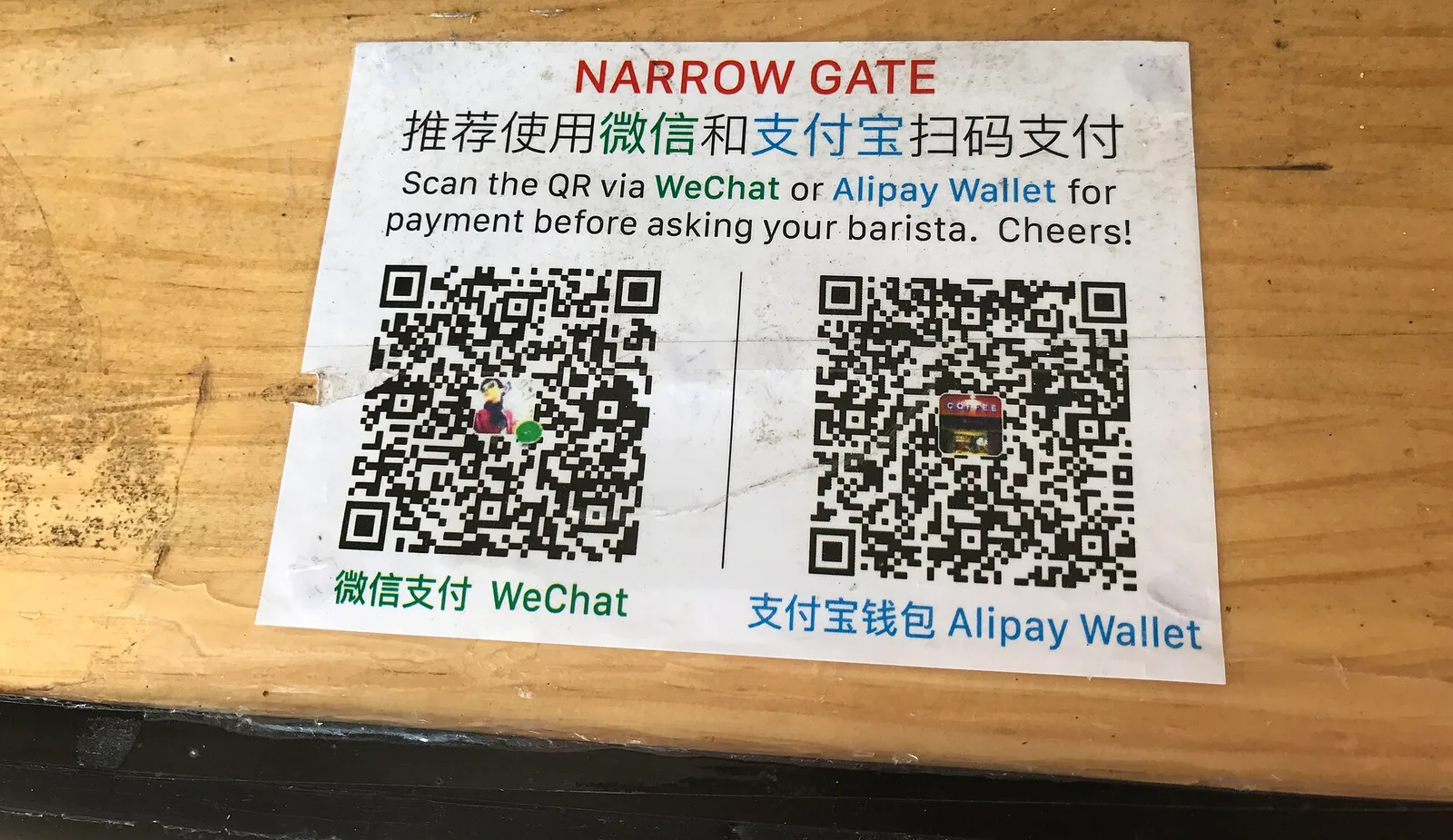
China is a mobile-payment economy. Alipay and WeChat Pay are used for everything from taxis to street food, and many small vendors no longer handle cash efficiently. Foreign cards can be linked to both apps, but the setup is easier before you travel. Cash still works, and ATMs exist, but relying on cash alone is slow and sometimes impossible.
In short
Set up Alipay with your foreign card before departure, carry a little cash as backup, and do not expect credit cards to work in small shops.
Setting up Alipay
Alipay accepts foreign credit and debit cards, including Visa and Mastercard. Download the app, create an account, and add your card before you leave home. Verification may require a passport photo and a selfie. Once set up, you can scan QR codes, pay for taxis through DiDi, and buy train tickets.
Some transactions trigger a 3% foreign card fee, and small vendors may not accept foreign cards for every payment. Test the app with a small purchase before you rely on it. The getting around briefing explains DiDi.
WeChat Pay and cash
WeChat Pay also accepts foreign cards, but the setup is more cumbersome and the app is more useful for messaging than payments. Alipay is the better primary option for travellers. Both apps require a phone number, which you can get from an eSIM or a local SIM.
Cash is legal tender and should be accepted, but small vendors may not have change. Carry ¥100 to ¥300 in small notes for markets and rural areas. ATMs are available in Guilin and Yangshuo, but not at Longji. The eSIM briefing covers connectivity.
Cards and ATMs
Credit cards work at large hotels and some restaurants, but not at most small shops, taxis, or attractions. Do not rely on them. ATMs from major Chinese banks accept foreign cards, with varying fees. Withdraw a larger amount once rather than making repeated small withdrawals.
Keep the emergency cash separate from your wallet. If your phone is lost or the app fails, cash is your fallback. The safety question covers general precautions.
Tipping and bargaining
Tipping is not expected in China. Restaurants, taxis, and hotels do not add service charges, and staff may be confused by a tip. Bargaining is appropriate at markets and souvenir stalls, not in restaurants or shops with fixed prices.
Prices for tourists can be higher than for locals, especially at markets and unmarked taxis. Ask the price first and walk away if it feels wrong. The budget guide explains typical costs.
Verdict
Alipay before you fly, cash as backup, cards only at hotels.
Next in the manual
04 linksField desk / direct line
Not sure this fits your trip?
Send the dates, the group, and what you are deciding between. The field desk will tell you what to cut and what to keep.
Independent advice. No bookings, no commissions, no visa service.