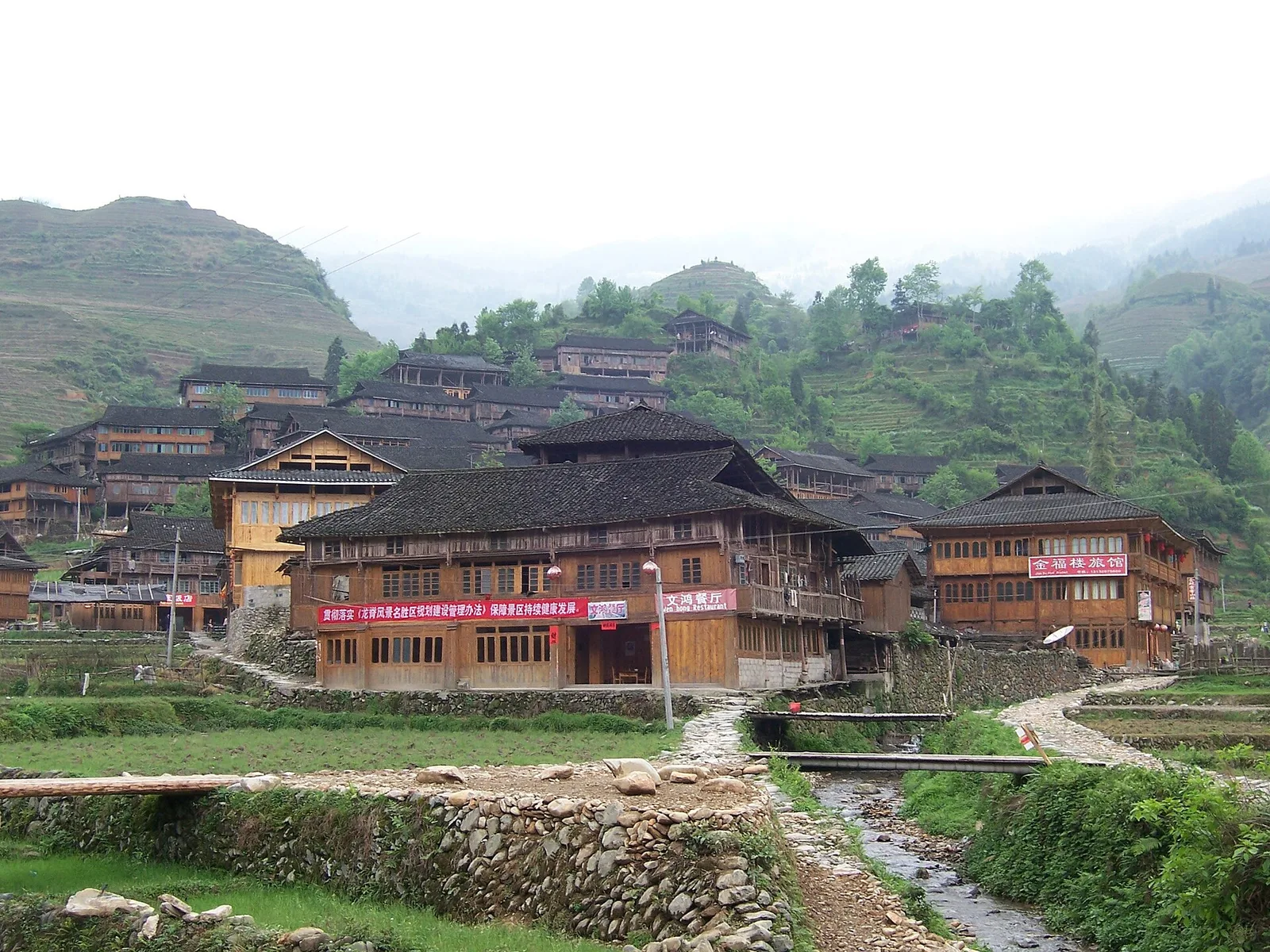
Longji's terraces are farmed by Zhuang and Yao villages, not maintained as a landscape attraction. Ping'an is the Zhuang village most visitors see; Dazhai, further up the valley, is Yao. The postcard stops at the viewing platform, but the village life continues below it: planting, harvesting, drying grain, running homestays, cooking bamboo rice, and keeping the water channels clear. Walking between villages is the best way to understand what you are looking at.
In short
Stay overnight in Ping'an or Dazhai, walk between villages, eat where the family eats, and remember the terraces are someone's field. Go May–June for water, September–October for gold.
Before you book
Prices and schedules change
Reserve the fixed-time items first, then build the rest around the weather. If you are deciding between two versions of the trip, send both.
Who lives here
Ping'an is a Zhuang village, and Dazhai and the Jinkeng terraces are Yao. The long-hair Yao women of Huangluo are famous, and performances are part of the local tourism economy. The villages are not exhibits: people farm, cook, go to school, and run guesthouses. Ask before photographing inside a home or of a person's face.
Mandarin is widely spoken, though older residents may speak Zhuang or Yao languages first. English is limited outside guesthouses. A few phrases and a translation app go a long way. The language briefing covers the basics.
The farming year
The terraces change through the year. In May and June the paddies are flooded and the terraces read as ribbons of water. July and August are green and lush, with the best chance of mist. September and October turn gold before the harvest, usually earlier at higher elevations. Winter strips the terraces back to their lines, and snow is rare but possible.
The Longji sight guide explains the viewpoints, and the best-time question compares the months. The terrace engineering note explains how the water system works.
Staying and eating
Guesthouses in Ping'an and Dazhai range from simple family rooms to comfortable timber hotels with views. Prices are roughly ¥200–500 in the shoulder season and higher at weekends and holidays. Ask about heating and hot water in winter, and about luggage transfer: cars stop at the village gate, and porters carry bags up the steps.
Family meals are the best part: bamboo rice, cured pork, mountain vegetables, and oil tea in the Yao villages. Eat what the house is cooking rather than ordering from a tourist menu. The oil tea guide explains the drink, and the Longsheng area guide covers where to base yourself.
Etiquette and walks
Stay on the marked paths and do not walk across planted terraces. Do not drop litter or pick crops. Buy from village stalls if you want a souvenir; the money stays local. Ask before taking photos of people at work, and do not pay children to pose.
The walk between Ping'an and the surrounding viewpoints takes two to four hours depending on the route. A local guide is useful and inexpensive; ask at your guesthouse. The 4-day route shows how to combine Longji with the river.
Verdict
Come for the view, stay for the village. One night changes the trip.
Next in the manual
04 linksField desk / direct line
Not sure this fits your trip?
Send the dates, the group, and what you are deciding between. The field desk will tell you what to cut and what to keep.
Independent advice. No bookings, no commissions, no visa service.