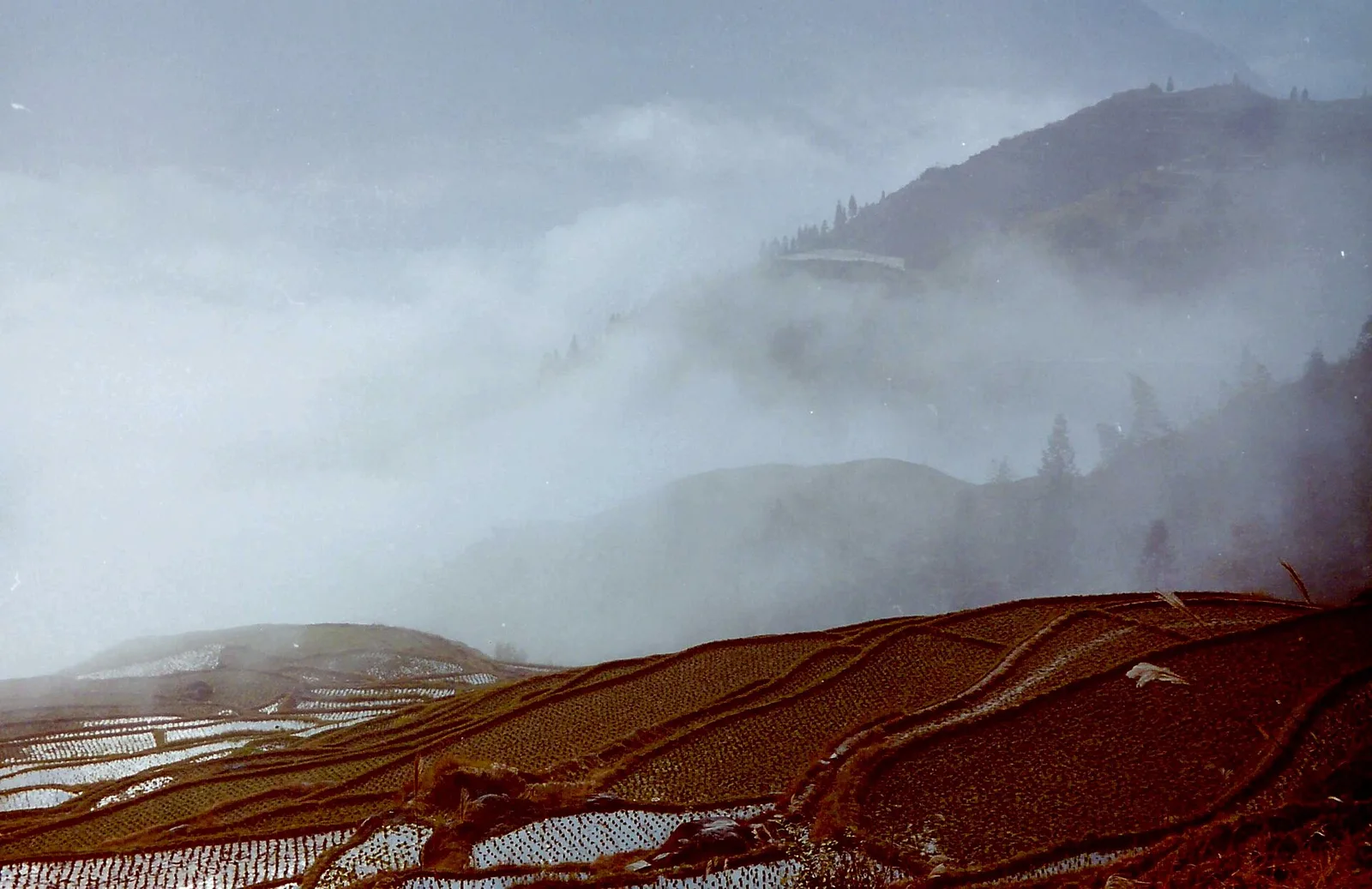
The Longji terraces are not just a pretty landscape. They are an engineered system for growing rice on steep slopes, built over centuries by Zhuang and Yao communities. Water is captured in forests above the villages, channelled through stone and earth canals, and released terrace by terrace. The system depends on collective maintenance, careful timing, and a deep understanding of the mountain's hydrology.
In short
Look for the channels, the forest cap, and the way each terrace holds a thin sheet of water. The terraces are a working agricultural system, not a garden.
The water system
Water is the first problem. The terraces rely on rain and springs, captured in the forest above the villages. Stone and earth channels carry it from the forest to the top terrace, and small openings release it down the slope. A farmer controls the flow into their own terraces with a wooden or stone plug.
The system works because the forest holds water and slows runoff. When the forest is cut, the channels silt up and the terraces dry out. The forest cap is as important as the terraces themselves. The Longji guide explains the landscape.
Building a terrace
Each terrace is a flat bed cut into the slope, supported by a retaining wall of stone or earth. The walls are built without cement, using dry-stone techniques that allow water to drain. The beds are puddled with water and mud before planting, which is why they reflect the sky in spring.
The work is done by hand and with simple tools. Maintaining the walls is a continuous job, especially after heavy rain. The terraces are a form of collective infrastructure, not individual gardens.
The farming calendar
The rice cycle begins with flooding and ploughing in spring, followed by transplanting in May or June. The fields are green through summer and gold by September or October, when the harvest begins. After the harvest, the terraces are left dry or planted with a winter crop.
The exact timing varies with altitude and weather. The best time question explains the visual changes. The when to go guide covers the regional climate.
Why it matters
The terraces are recognized as an agricultural heritage system, and they remain a working landscape. Tourism brings income, but it also brings pressure: guesthouses, roads, and waste. The best way to support the villages is to stay locally, eat local food, and respect the paths and fields.
The Longsheng area guide covers where to stay. The Longji guide covers the walks.
Verdict
A water system first, a view second. The forest above the terraces is part of the machine.
Next in the manual
04 linksField desk / direct line
Not sure this fits your trip?
Send the dates, the group, and what you are deciding between. The field desk will tell you what to cut and what to keep.
Independent advice. No bookings, no commissions, no visa service.