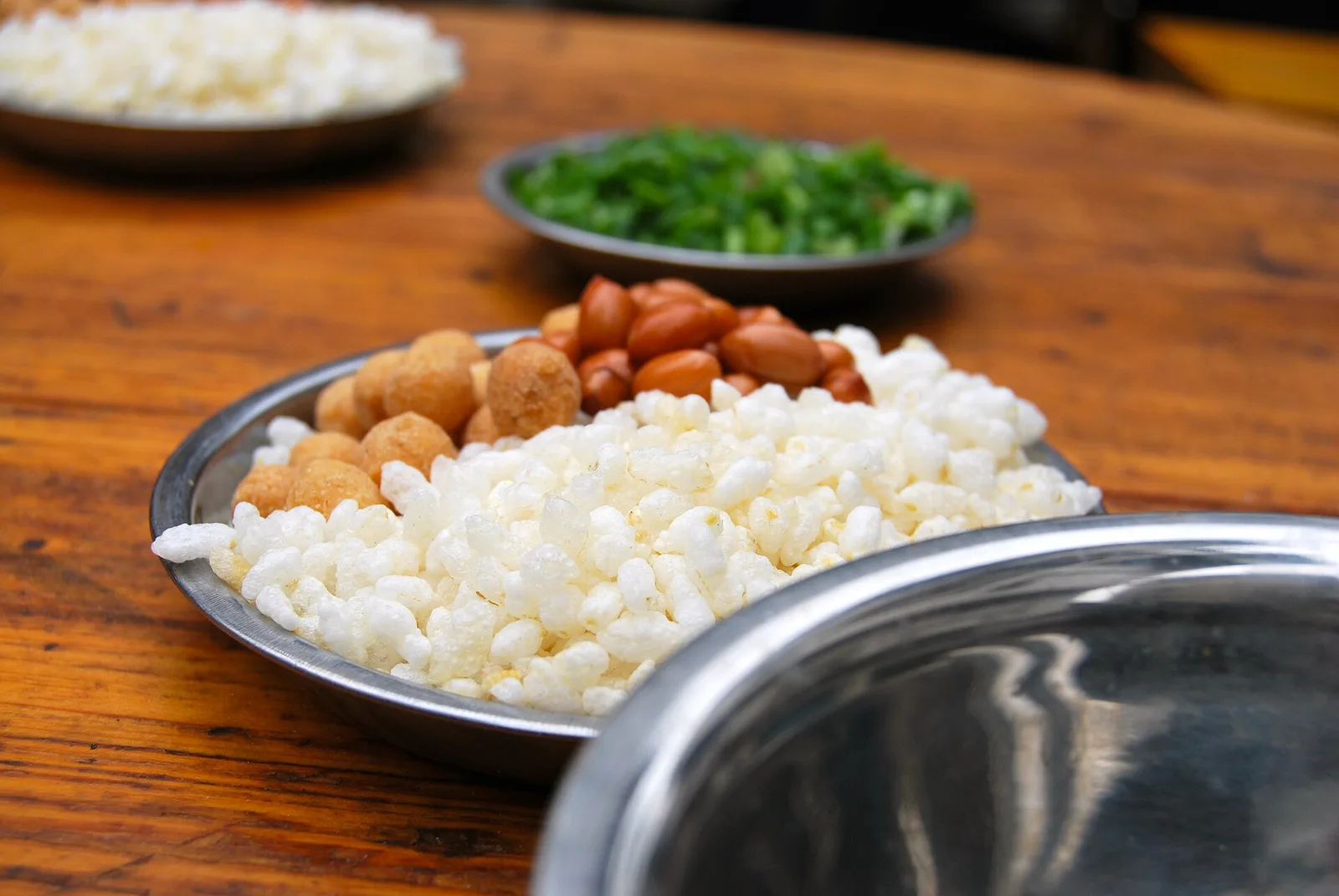
Oil tea is a traditional drink of the Zhuang and Dong communities in northern Guangxi, especially around Gongcheng and Longsheng. Tea leaves are pounded with ginger and garlic, fried in oil, and simmered with water to make a bitter, savoury broth. It is poured over puffed rice, peanuts, and scallions, and eaten with a spoon. It is warming, salty, and unlike any tea most visitors have tried.
In short
Try it at a local guesthouse or market stall, especially in Longji or Gongcheng. It is an acquired taste: bitter, salty, and savoury rather than sweet.
What it is
Oil tea is made by pounding tea leaves with ginger, garlic, and sometimes peanuts in a mortar, then frying the mixture in oil and simmering it with water. The liquid is strained and poured over puffed rice, peanuts, scallions, and sometimes vegetables. It is eaten with a spoon, not sipped like Western tea.
The flavour is bitter, savoury, and warming, with a strong ginger kick. It is a morning drink in many villages, and a gesture of hospitality. In Longji, guesthouses often serve it to guests.
Where to try it
The best places are village guesthouses around Longji and the Gongcheng area, where oil tea is part of daily life. In Guilin and Yangshuo, some local restaurants serve it, but the village version is better.
If you are staying overnight at the terraces, ask your guesthouse to prepare it for breakfast. The Longsheng and Longji area guide covers guesthouses. The Longji terraces guide explains the villages.
How to drink it
Hold the bowl with both hands, as with any tea. Eat the puffed rice and peanuts with a spoon, and sip the liquid. It is often refilled; the second and third brew are milder than the first. It is polite to accept at least one refill.
It is not a sweet tea, and it is not a substitute for coffee. Think of it as a savoury soup. The food hub covers other local dishes.
Is it worth it?
If you are interested in local culture and food, yes. It is a genuine tradition and a window into village life. If you dislike bitter flavours, you may not finish the bowl.
It pairs well with a cold morning at the terraces and a long walk afterward. The rice terrace engineering field note explains the agricultural context.
Verdict
A bitter, warming village tradition. Try one bowl, ideally in Longji.
Next in the manual
04 linksField desk / direct line
Not sure this fits your trip?
Send the dates, the group, and what you are deciding between. The field desk will tell you what to cut and what to keep.
Independent advice. No bookings, no commissions, no visa service.