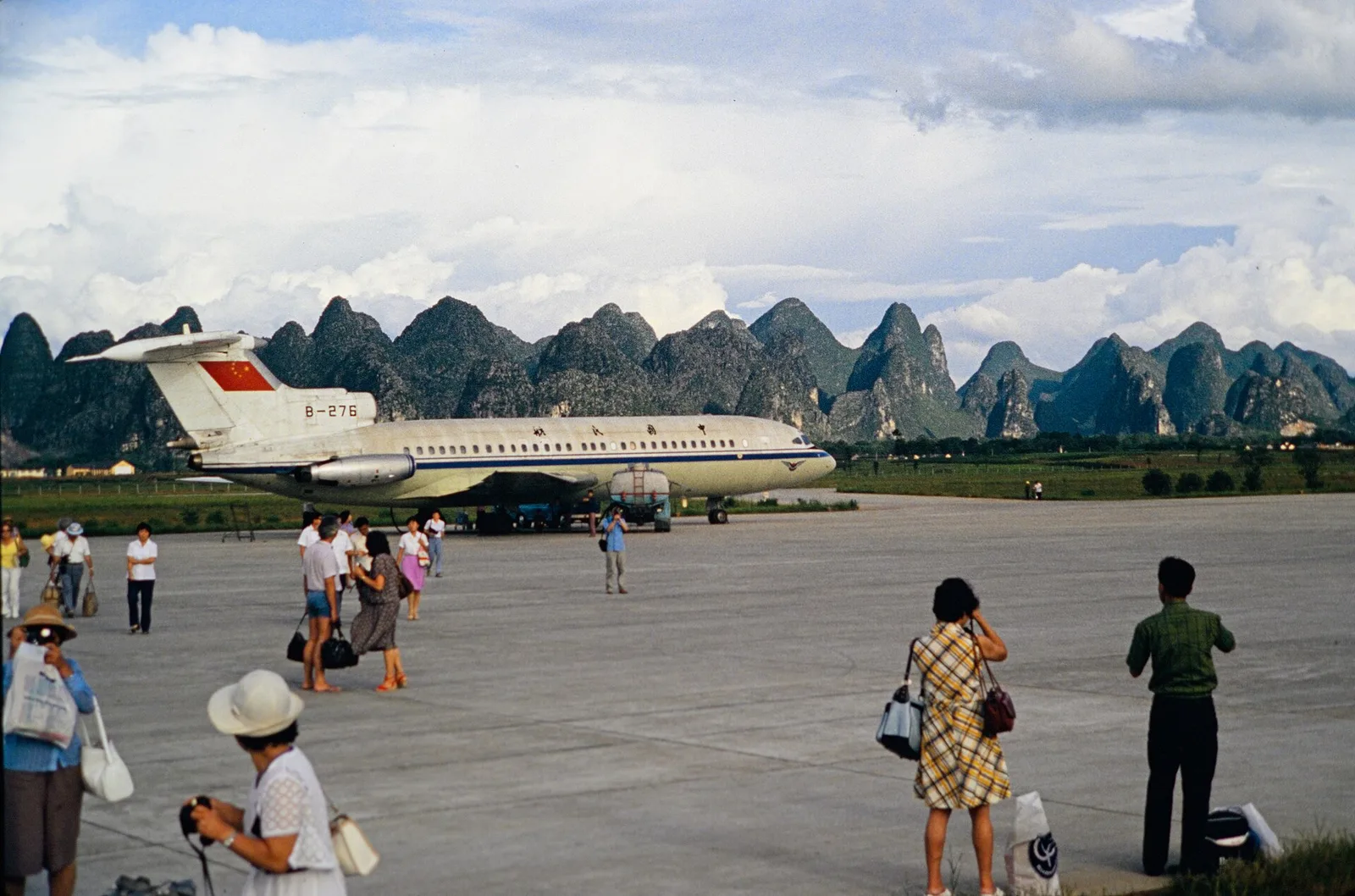
During the Second World War, Guilin was a significant Allied airbase. American and Chinese units operated from airfields in the region, and the karst landscape provided natural cover for storage and shelters. The city was bombed, occupied, and largely destroyed in 1944. The wartime history is largely invisible today, but a few sites and stories remain.
In short
This is background for travellers interested in history rather than a sightseeing route. The airfields are gone; the story survives in museums and local memory.
Why Guilin
Guilin's location in southern China made it a useful base for operations against Japanese forces in the region and for supply routes. The US Fourteenth Air Force, under Claire Chennault, operated from airfields in Guangxi, and Guilin became a hub for aircraft, fuel, and personnel.
The karst landscape offered natural advantages: caves for storage and shelters, and terrain that complicated enemy attacks. The airfields themselves were built on flat ground outside the city.
The war years
The airbase brought Allied personnel, supplies, and attention to a relatively remote city. It also made Guilin a target. Japanese bombing damaged the city, and in 1944 the Japanese launched a major offensive that eventually captured Guilin. The airfields were destroyed or abandoned, and the city suffered extensive damage.
The wartime period is remembered in local museums and in the stories of families who lived through it. The Jingjiang Prince City museum covers earlier history; the wartime story is less visible.
What remains
The airfields are gone, replaced by development. Some caves used for storage or shelter still exist, but they are not set up as tourist sites. The most accessible historical sights are the city's museums and the older streets, which preserve fragments of the period.
Travellers interested in the war should visit the Guilin Museum and ask locally about wartime sites. The rainy day plan includes museum options.
Why it matters
The wartime history complicates the postcard image of Guilin. The city has been rebuilt several times, and the landscape has been used for defense as well as tourism. Knowing this makes the city more interesting, not less.
The karst geology explains why the caves were useful. The city centre guide covers the museum area.
Verdict
A hidden layer of the city's history. Visit the museum and ask questions; the airfields are gone.
Next in the manual
04 linksField desk / direct line
Not sure this fits your trip?
Send the dates, the group, and what you are deciding between. The field desk will tell you what to cut and what to keep.
Independent advice. No bookings, no commissions, no visa service.