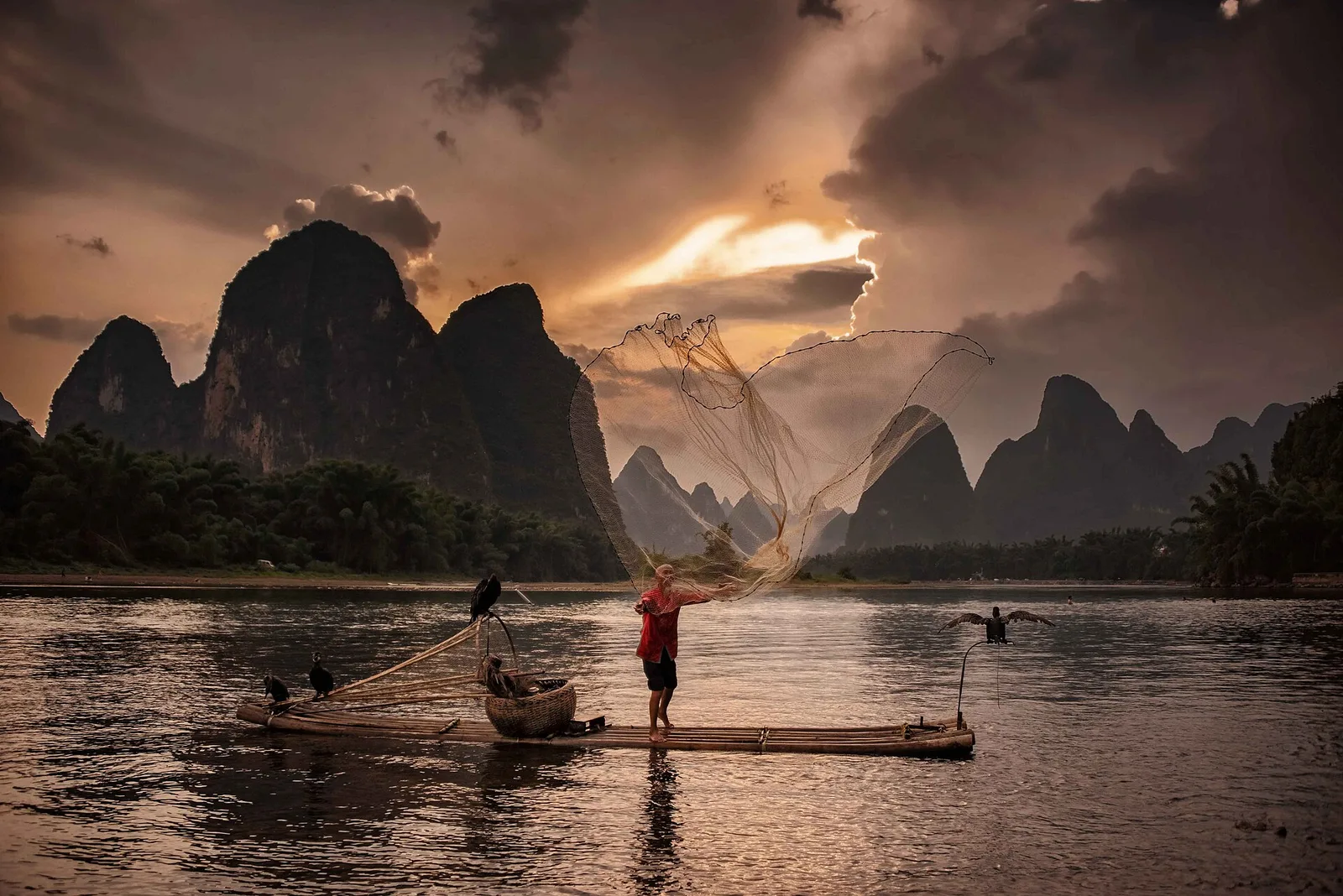
The Guilin landscape is one of the most photographed in China, which makes it hard to find an original frame. The good news is that light and weather do most of the work. Mist, low sun, and rain create the layered, ink-painting effect that defines the region. The best photographs come from patience and timing, not from a secret location.
In short
Shoot at dawn and dusk, prioritise Xianggong Hill and the twenty-yuan bend, and carry a rain cover. Midday light is flat and the haze is worst in summer.
Before you book
Prices and schedules change
Reserve the fixed-time items first, then build the rest around the weather. If you are deciding between two versions of the trip, send both.
When to shoot
Dawn is the best time: the air is calm, mist is more likely, and the tour boats have not started. Sunset is warmer but often hazier. The hour after rain can be spectacular, with clouds lifting off the peaks and soft, diffuse light.
Summer is hot and hazy; winter is clear but the light is low and the river is at its lowest. Spring and autumn are the best balance. The when to go guide explains the seasonal light.
Where to shoot
The two essential viewpoints are Xianggong Hill and the twenty-yuan bend. Xianggong gives the wide panorama; the bend gives the classic note image. Both are best at dawn, and both get crowded.
On the river, the Yangdi–Xingping raft gives water-level frames and village scenes. The cruise is less flexible but covers more distance. In the city, Elephant Trunk Hill and the lakes work at dusk.
Gear and settings
A standard zoom covers most viewpoints; a telephoto is useful for compressing the peaks. A tripod is essential for dawn and dusk. Bring a rain cover and a microfiber cloth; humidity causes condensation on lenses.
For misty scenes, expose for the highlights and let the shadows go soft. A polarising filter can cut haze but may also flatten the reflections. Shoot RAW if you can. The photography route puts the locations in order.
Ethics and rules
Drones are restricted in scenic areas, including around Xingping and the terraces. Check locally before flying; fines are possible. Do not block paths or viewpoints for long periods, and be respectful when photographing people in villages.
The cormorant fishermen near Xingping often expect payment for photographs. If you want a staged shot, agree on a price first. The cormorant field note explains the practice.
Verdict
Dawn at Xianggong, then the twenty-yuan bend. Mist is your friend; midday is your enemy.
Next in the manual
04 linksField desk / direct line
Not sure this fits your trip?
Send the dates, the group, and what you are deciding between. The field desk will tell you what to cut and what to keep.
Independent advice. No bookings, no commissions, no visa service.