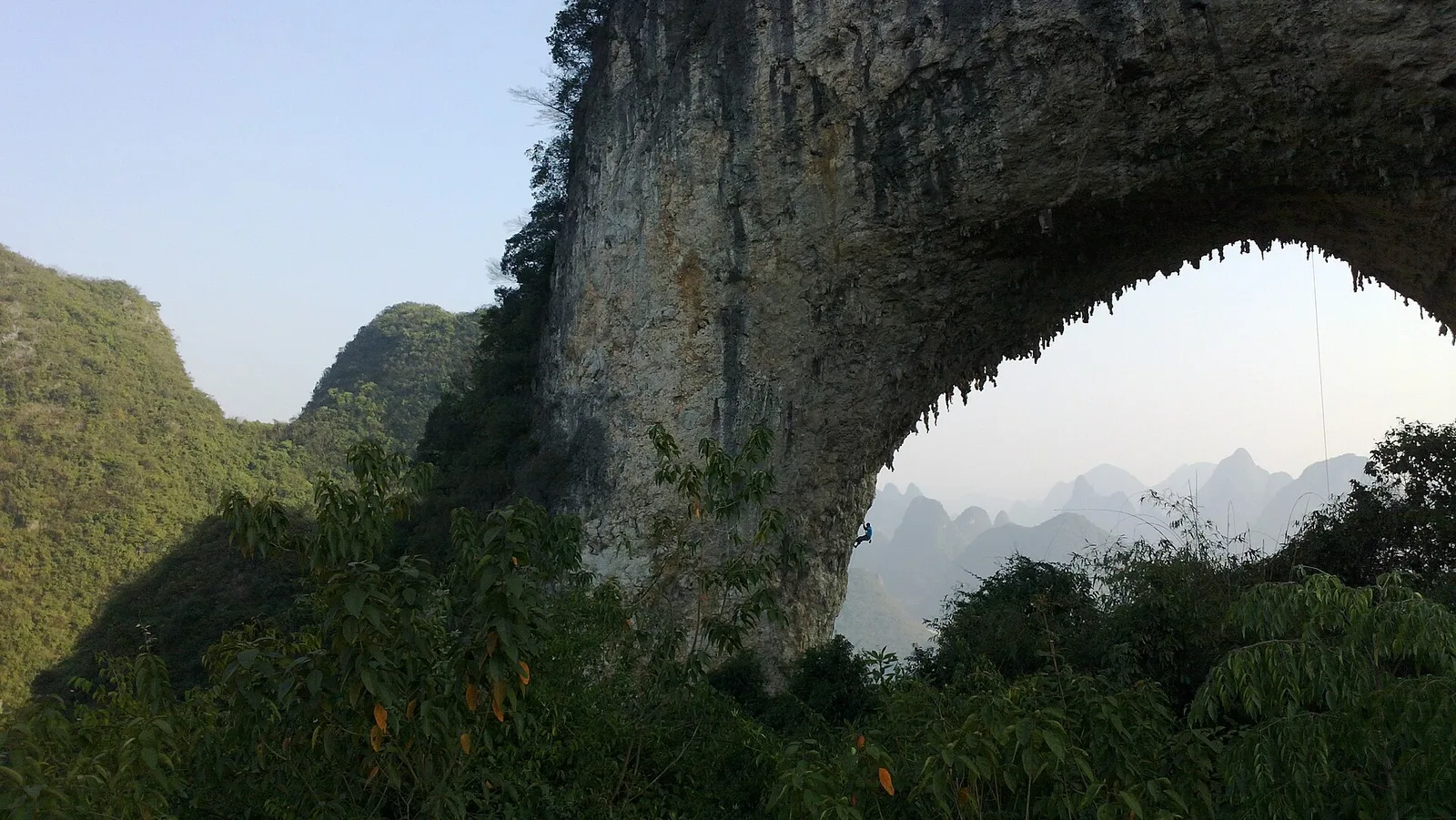
Yangshuo is one of the best sport-climbing destinations in Asia. The karst towers around the town offer hundreds of bolted routes on steep, pocketed limestone, with grades from beginner to world-class. The scene began in the 1990s, when foreign climbers and local guides started developing crags, and it has grown into a year-round community with schools, gear shops, and a climbing festival.
In short
If you climb, bring shoes and chalk; if you don't, a half-day course is a good introduction. The crags are close to town, but access and ethics matter.
The rock
The climbing is on limestone, with pockets, tufas, and steep faces. The rock is generally solid, but some routes are polished from traffic. The grades are stiff compared with some European areas, and the style rewards technique and endurance rather than raw strength.
The crags are close to town, which makes Yangshuo unusual: you can climb in the morning and be back for lunch. The Moon Hill area has routes on the arch and surrounding walls.
Where to climb
Moon Hill is the most famous crag, with routes on the arch and the surrounding walls. White Mountain, Swiss Cheese, and the Egg are other well-known sectors. Some crags are on private land or in scenic areas, and access can change; check with a local school before you go.
The grades range from beginner-friendly slabs to hard overhangs. If you are new to outdoor climbing, book a guide who knows the access arrangements and can set up top ropes. The Moon Hill guide covers the approach.
Schools and seasons
Several climbing schools operate in Yangshuo, offering courses, guiding, and gear rental. Book in advance in high season. A half-day introduction includes instruction, equipment, and transport to the crag. Multi-day courses cover lead climbing and anchors.
The best season is October to April, when the weather is cool and dry. Summer is hot and humid, and the rock can be damp. Winter is cool but climbable. The when to go guide explains the climate.
Ethics and access
Stick to established routes and bolted anchors. Do not add bolts without permission. Pack out trash, keep noise down, and respect the villages and farmland around the crags. Some areas have sensitive access arrangements; a local school will know.
Photographing climbers is fine, but ask first. Do not stand under routes or block belay areas. The river photography guide covers general ethics.
Verdict
World-class limestone close to town. Book a local guide and respect access.
Next in the manual
04 linksField desk / direct line
Not sure this fits your trip?
Send the dates, the group, and what you are deciding between. The field desk will tell you what to cut and what to keep.
Independent advice. No bookings, no commissions, no visa service.