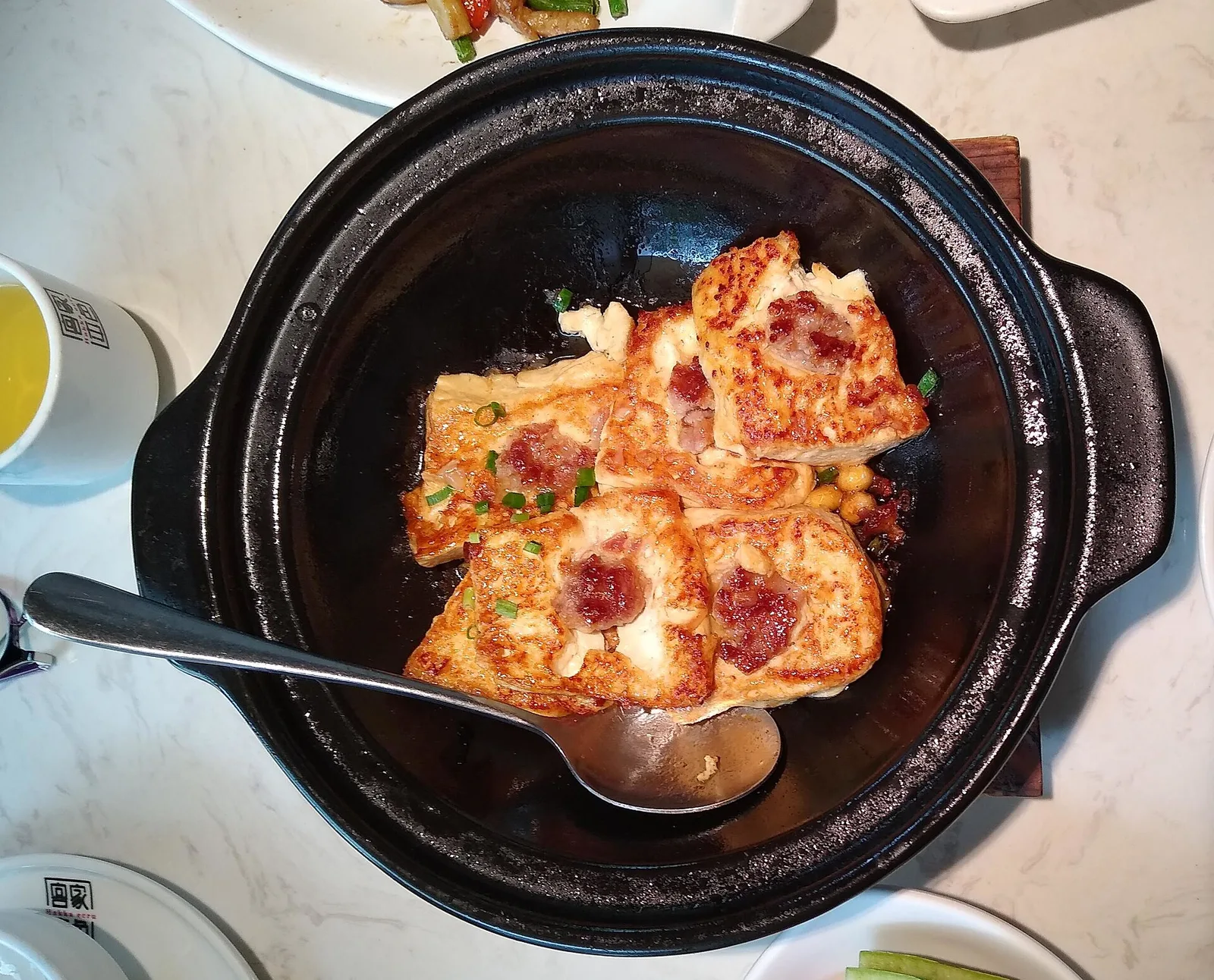
Niang dishes are a Guangxi home-cooking tradition: vegetables are hollowed out and stuffed with a mixture of minced pork, mushrooms, and herbs, then steamed or pan-fried. The most common versions use green peppers, eggplant, tofu, and bitter melon. The dish is often called 'eighteen kinds of niang' and is a staple of family meals and small restaurants.
In short
Order a mixed plate at a local restaurant, or look for it on a menu of home-style dishes. It is savoury, filling, and usually mild. Ask for the version without pork if you are vegetarian.
What it is
The word niang refers to the technique of stuffing one ingredient into another. The filling is usually minced pork with mushrooms, scallions, ginger, and soy. The vegetables are hollowed or slit, filled, and cooked by steaming, pan-frying, or simmering in a light sauce.
The most common varieties are green peppers, eggplant, tofu, and bitter melon. The pepper version is mildly spicy; the bitter melon version is, as the name suggests, bitter. The tofu version is softer and absorbs the sauce.
Where to eat it
It is a home-style dish, so look for small restaurants with a Chinese menu and a local clientele. In Yangshuo, the side lanes off West Street are better than the main drag. In Guilin, the neighbourhood restaurants near the centre are a good bet.
It is often served as part of a larger meal, alongside rice and a vegetable dish. The Yangshuo town guide and city centre guide list the main eating areas.
How to order
Ask for a mixed plate (niang san pin) if you want to try several varieties. If you are vegetarian, ask for tofu or vegetable versions and confirm that the filling has no pork. The sauce is usually light and savoury, not spicy.
It pairs well with Guilin rice noodles or plain rice. The food hub covers other local dishes.
Is it worth it?
Yes, if you want a break from fish and noodles. It is inexpensive, filling, and genuinely part of the local diet. It is not a headline dish, but it is a good everyday meal.
Vegetarians may find the options limited, as pork is the default filling. The Lipu taro pork is the opposite: a rich banquet dish.
Verdict
Honest, filling home cooking. Order a mixed plate and share.
Next in the manual
04 linksField desk / direct line
Not sure this fits your trip?
Send the dates, the group, and what you are deciding between. The field desk will tell you what to cut and what to keep.
Independent advice. No bookings, no commissions, no visa service.